Argentina Stops Pretending
After thirteen years of formal prohibition and quiet coexistence, Milei’s Argentina brings vapes into legality — on the state’s terms, under its gaze, and into the gears of regulation.
For more than a decade, Argentina banned electronic cigarettes with one hand while learning, with the other, to live with them. In the law, they existed as a prohibition. In daily life, they became a diffuse habit: turning up in neighborhood kiosks, on Instagram profiles, in discreet deliveries, in suitcases crossing borders, in school backpacks, and in whispered conversations during class breaks.
The forbidden product acquired the functional invisibility of tolerated things. It needed no official storefronts, no public recognition. It only had to move through the right channels, among people accustomed to living in a country where the distance between rule and reality is rarely an administrative accident; sometimes, it is the very method of government.
The ban remained on paper—reaffirmed by ANMAT in 2016, as though repeating a prohibition were enough to make it real. The market, however, already existed in everyday life.
On May 4, 2026, the Argentine state decided to interrupt the performance, or at least rearrange the stage.
ANMAT, the health authority responsible for medicines, food, and medical technology, revoked the ban it had imposed in 2011.
This was not exactly a liberal conversion. Still less was it a sudden enthusiasm for harm reduction, an idea still treated with unease by much of Latin America’s public-health bureaucracy. It was something rarer: a tacit admission that a rule can survive for years after it has lost contact with the world it claims to govern.
Administrative Order 2543/2026 overturned the rule that had prohibited, throughout Argentine territory, the importation, distribution, sale, and advertising of electronic cigarettes and their accessories. The ban that had promised control had ended up producing something else: a market without registration, without reliable traceability, and without effective health oversight.
In bureaucratic language, that literary genre governments deploy when they need to admit failure without ever uttering the word, the agency acknowledged that absolute prohibitions, when faced with dynamic markets and a high capacity for substitution, can push consumers into informal and illegal circuits, where products of unknown origin and even murkier composition circulate.
Translation: vapes did not disappear. They merely migrated into zones where the state could no longer see them, even as it continued to pretend to control them.
At bottom, Argentina did not decriminalize a desire. It tried to bring back to the surface a market that had never agreed to live entirely underground.
The Confession
ANMAT Administrative Order 2543/2026 is not merely a health regulation. Its recitals carry something rarer than a regulatory shift: the quiet admission that an absolute ban produced precisely what it had promised to prevent.
For years, products of unknown origin circulated without effective health oversight. The state could prohibit them. But prohibiting has never been the same as knowing. Still less as monitoring.
The word “failure” does not appear. Official documents rarely allow themselves that degree of exposure. They prefer cushioned verbs, impersonal constructions, and technical abstractions carefully designed so that no one has to claim authorship of the disaster.
They do not say: “We were wrong.”
They say: “accumulated experience has shown.”
They do not say “the ban failed.”
They say: “absolute prohibition schemes may encourage informal channels.”
Contemporary bureaucracy almost never acknowledges its dead. It merely recalibrates categories, updates protocols, and publishes new guidelines.
The 2011 ban belonged to another world.
At the time, the electronic cigarette was still treated as a technological eccentricity: an object difficult to classify, part imported gadget, part public-health threat, part internet curiosity.
The state answered with the reflexive grammar of defensive public health: prohibit first; understand later—provided there was still time.
But the market did not remain within the legal definition. What in 2011 fit under the narrow label of “electronic cigarette” had, fifteen years later, become an entire architecture of devices, liquids, salts, sticks, disposables, parallel imports, digital sellers, and informal circuits able to change shape faster than any regulatory agency can publish a resolution.
The law stood still. The market did not.
That is why ANMAT’s confession runs deeper than it seems. It does not repeal a failed rule. It recognizes, though without saying so outright, that public policies can fail not for lack of intention but from an excess of abstraction: when they begin governing imaginary categories while real life takes place somewhere else.
In trying to erase the market, the state lost the ability to see it.
The Ministry of Health added a politically uncomfortable figure to the diagnosis: according to the ministry itself, 35.5 percent of adolescents said they had tried an electronic cigarette at least once.
The percentage matters less as a moral scandal than as an administrative symptom. It reveals that vaping had already entered young people’s everyday lives long before formal legalization, and without any minimally consistent public-health mediation.
For better or worse, then, Argentina is not regulating a future possibility. It is trying to recover some degree of legibility over a phenomenon that expanded first and only afterward entered the institutional field of vision.
That changes the very meaning of public policy. The country is not trying to regulate the arrival of an unknown product. It is trying to catch up with something that has already arrived, and settled in before registration, before laboratories, before health warnings, and, in many respects, before the state itself had the capacity to understand it.
The reform, then, does not appear to spring from an ideological conversion to harm reduction. It emerges from a colder calculation, almost humiliating for a state that spent years mistaking prohibition for control: if the market does not disappear, perhaps what remains is at least the possibility of tracing it, taxing it, measuring it, and reducing part of the opacity in which it thrived.
What Changes in the Air
The market now being born will be legal, but narrow.
The new regulation bans disposable electronic cigarettes with prefilled solutions, restricts flavors, and tightly controls how products may be presented. Liquids and sticks may taste only of tobacco; nicotine pouches, of tobacco or menthol.
It is a public-health policy, of course. But it is also an aesthetic policy.
For those accustomed to the informal market—artificial fruits, chemical desserts, mentholated ice, fluorescent packaging, and devices designed to look like fashion accessories—the authorized market will seem almost monastic. The official palette will have few colors. The permitted smell will, almost always, be that of the old tobacco that public policy itself claims to want to overcome.
There is something paradoxical in this: the conventional cigarette remains available in every kiosk in the country, sold in standardized packs, yet fully integrated into Argentine daily life. Products without combustion, by contrast, enter the market as bodies under permanent surveillance, authorized only under aesthetic restraint and regulatory suspicion.
Then come the administrative reins.
Resolution 549/2026 created the Registry of Tobacco and Nicotine Products, a single database for manufacturers, importers, products, and packaging. The rule covers electronic devices, vape liquids, heated-tobacco products, sticks, and nicotine pouches.
The Undersecretariat for Health Planning and Programming will have forty-five days to put the system into operation. The bureaucratic detail matters less for the deadline than for what it reveals: even under a government that has turned anti-state rhetoric into a daily spectacle, reorganizing the market will require exactly what Mileiism most likes to declare obsolete: a robust, slow, far-reaching, and permanently interventionist administrative machine.
The market, then, is not simply being thrown open. It is being born conditional on the construction of that machinery.
Only registered products will be allowed to circulate legally. Manufacturers and importers will have to demonstrate origin, composition, quality, traceability, labeling, and health responsibility.
The technical details fill the annexes. But the political meaning is simpler and much older: the state is trying to regain control over a market that spent years operating without formal authorization, though never without consumers.
The third layer is economic.
Decree 305/2026 brought heated tobacco products, cartridges, bars, electronic cigarettes, and nicotine pouches under the temporary increase in the Extrazone Import Duty, applying to these goods the ceiling that Argentina has consolidated before the World Trade Organization.
The official justification is to bring their tax burden closer to that already imposed on traditional tobacco products.
The message, however, is more transparent: these products may lose their clandestine status, but they must not become cheap, abundant, or culturally seductive.
Legality arrives accompanied by labels, traceability, high taxation, and symbolic restraint. As if the state were saying: you may exist, but only without enthusiasm.
Neither the United Kingdom nor Australia
Argentina is not alone in this impasse. The whole world is trying to work out what to do when nicotine detaches itself from combustion and, for the first time in more than a century, the cigarette ceases to be its inevitable technological form.
No country has fully solved the problem. What exists are competing models of regulatory anxiety.
The United Kingdom chose to treat electronic cigarettes as a cessation tool aimed at adult smokers. For years, the NHS publicly maintained that vapes are far less harmful than combustible cigarettes and can help smokers give up tobacco. But that defense of substitution has always come with a carefully drawn boundary: the products are not recommended for nonsmokers and may not be sold to anyone under eighteen, even if they smoke cigarettes.
Even so, the British model may have been the first major contemporary state experiment built on an idea that remains politically uncomfortable for parts of the international public health community: nicotine and combustion need not remain morally inseparable.
The United States took another path, more legalistic, slower, and more corporate. To legally market a new tobacco product, companies must obtain prior authorization from the FDA, which assesses whether its release is “appropriate for the protection of public health,” weighing risks and benefits for both users and nonusers.
The decisive detail lies precisely in that formula: “public health” includes not only current smokers, but also future, hypothetical, statistical bodies, especially adolescents who might never have smoked, but whom contemporary regulatory rhetoric has turned into the central character in almost every debate about nicotine.
In May 2026, the FDA authorized new ENDS products, including the first items in that category with flavors that were neither tobacco nor menthol. The decision does not dismantle the American regulatory filter. It merely shows that even rigid systems end up making exceptions when they must acknowledge what part of the political discourse still resists admitting: relative risk matters.
Australia went to the pharmaceutical extreme of the equation. Since July 2024, vapes can be sold only in participating pharmacies, including nicotine-free versions. Since October of that year, pharmacists have been allowed to supply therapeutic products containing up to 20 mg/ml of nicotine to adults without a medical prescription, provided certain clinical and regulatory conditions are met.
The result is a curious model: nicotine remains legal, but surrounded by the symbolic atmosphere of a controlled medicine. As if the Australian state accepted its existence only once it had been converted into a clinical object, almost stripped of culture, pleasure, or autonomy.
Argentina is trying to draw an intermediate formula. It does not prescribe vapes as medicine. It does not release them as ordinary consumer goods. It does not explicitly adopt the language of harm reduction. Nor does it maintain absolute prohibition.
It registers, taxes, limits, traces, and watches.
It is a middle-ground policy. But the middle ground, especially in an age of regulatory panic and mutating markets, rarely means balance.
Sometimes it means only managed hesitation.

Who Gets In and Who Is Left Out
The new market is being born legal, but not necessarily accessible. Every regulation draws its own maps of belonging. On one side are actors capable of translating bureaucratic demands into economic operation. On the other are those too small to sustain legal departments, laboratory certifications, formal traceability chains, and permanent negotiations with health authorities.
The ban filtered by illegality.
The new order may instead filter by the ability to survive the cost of compliance.
For large companies, the new regime means regulatory adaptation. For small importers, independent manufacturers, and specialized shops, it may mean something else: the transformation of legality into an economic barrier.
The requirement of laboratory testing, certificates, technical documentation, traceability, batch control, compliance, and individual registration for each product favors those who already have working capital, a consolidated legal structure, access to laboratories, and a long history of managing their own legitimacy.
The multinationals start ahead, which would hardly surprise anyone watching a government that routinely denounces the excesses of the state while reorganizing markets in profoundly selective ways.
Philip Morris International, the owner of Massalin Particulares in Argentina, suspended in 2023 a $300 million plan to produce next-generation products at its Merlo plant after the Ministry of Health banned heated tobacco devices.
British American Tobacco, for its part, already operates globally with comprehensive portfolios across great vapor, heated tobacco, and modern oral products, including brands such as Vuse, glo, and Velo.
This is precisely the kind of company for which the vocabulary of contemporary regulation—traceability, compliance, certification, monitoring—does not pose an existential threat. It provides market infrastructure. Because large corporations do not merely survive bureaucracy. They often grow through it.
Small operators face another landscape.
Some will manage to formalize probably more in retail and distribution than in the manufacture of technically complex devices.
Others may remain where they have always been: in the gray zone between social tolerance, practical illegality, and economic survival. Especially if legalized products reach shelves expensive, limited in variety, and slow to arrive.
The reform may therefore produce an ambiguous effect: pulling part of the market out of the shadows while concentrating the legal surface in the hands of those who already had enough scale to pay for the right to remain visible.
The Smoker at the Half-Open Door
For the adult smoker, public policy rarely arrives as theory. It arrives at the counter, priced. As the presence or absence of stock. As packaging that is intelligible, or deliberately opaque. As the concrete difference between finding a possible alternative and, almost without thinking, returning to the familiar pack.
In the best-case scenario, the reform will produce a banal scene: an adult walks into an authorized shop, finds a registered product, reads the nicotine concentration, identifies the manufacturer, understands at least minimally what he is buying, compares prices, and decides to try something else.
Nothing epic. No public-health redemption. Just the small daily gesture of not lighting the next cigarette.
In the worst-case scenario, the scene changes.
The legalized product arrives expensive, scarce, limited in variety, tobacco-flavored, and surrounded by language so cautious it can barely explain its own existence.
The package warns but does not inform. The seller fears saying too much. Public discourse avoids any nuance that might sound less abstinence-minded than is acceptable. And so the smoker returns to what he already knows: the traditional pack or the same informal market the reform claimed it wanted to replace.
This is where harm reduction stops functioning as a technical slogan and faces its hardest test: existing materially.
An alternative confined to bureaucratic registration does nothing to reduce harm. It merely produces the administrative appearance of public policy.
To compete with the cigarette, it has to exist in the real world: at a possible price, with concrete access, in everyday circulation, through intelligible information, and in that gesture repeated thousands of times a day, the decision to postpone, replace, or simply not light the next one.
The Argentine government avoids calling this logic by the name it almost touches but never fully embraces: harm reduction.
Its grammar prefers the aseptic language of administrative technique—risk management, surveillance, monitoring, control. There is no enthusiasm for substitution. Nor any explicit recognition that adult smokers may deserve clear access to potentially less harmful alternatives.
There is, instead, a permanent discomfort with any policy that accepts discussing nicotine outside the classic language of blame.
ANMAT itself states that no tobacco or nicotine product is risk-free and that all involve potential dependence and adverse effects.
That is true.
But it is also a carefully incomplete truth.
Public health rarely operates in moral absolutes. It works through differences in risk, gradations of harm, comparative probabilities, and imperfect choices made by real people in real conditions.
The decisive question, then, was never whether nicotine is completely safe.
The question is: safe compared with what?
And it is precisely there that contemporary health discourse begins to hesitate.
Resolution 549/2026 recognizes that the public should be informed about differences in relative risk among products associated with traditional cigarettes, with or without tobacco, with or without nicotine. But legally recognizing this is easier than culturally accepting it.
Because informing people about differences in risk means admitting something politically uncomfortable for parts of the public-health bureaucracy: different products may not deserve the same moral frame.
The problem is that silence also produces regulatory effects.
When the state—captured by the interests of whoever happens to hold the net—avoids distinguishing combustion from substitution, it creates a discursive fog in which radically different products begin to look equivalent. And in that carefully managed confusion, the conventional cigarette preserves its greatest historical advantage: familiarity.
In the end, the answer will not lie only in the text of the rules. It will stand in front of the shelf. In what the smoker finds. In what he can understand. In what he can afford. And in what he decides—or manages—not to light.

The Paradox of the Lit Cigarette
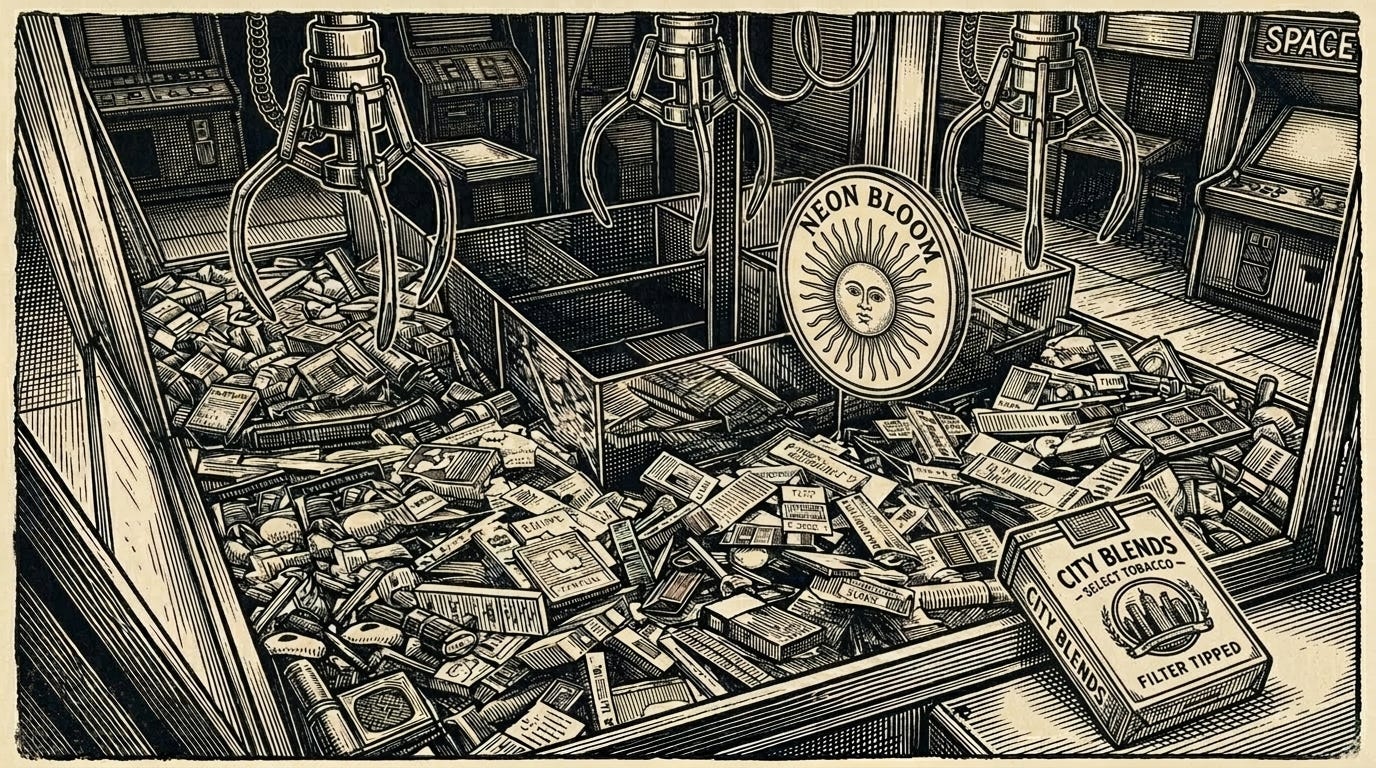
No image better captures the Argentine reform than this: the conventional cigarette, a product whose health risks have been documented for decades, remains legal, available, and perfectly integrated into the everyday landscape of kiosks across the country.
Meanwhile, products that deliver nicotine without combustion enter the market amid regulatory suspicion: restricted flavors, monitored packaging, rigorous technical requirements, permanent traceability, and limits that the traditional cigarette never faced as it cemented its cultural presence over the course of the twentieth century.
The cigarette has a brutal historical advantage: it arrived before contemporary guilt. It established itself as a taxable commodity, a social habit, and a familiar object at a time when our societies had not yet developed the current moral, scientific, and regulatory machinery around nicotine.
The new products arrive too late to receive any presumption of innocence.
They enter a world that already knows the human cost of tobacco, and so, from the moment of their regulatory birth, they carry a kind of hereditary guilt.
Argentine policy does not resolve this paradox.
It merely rearranges it administratively.
For advocates of harm reduction, the contradiction seems obvious: the deadliest product remains widely accessible, while non-combustion alternatives appear surrounded by preventive restrictions and permanent institutional distrust.
Health authorities, however, tend to frame the question differently. The focus shifts from the existing adult smoker alone to future, hypothetical, statistical adolescents, young people who might never have smoked, but who have become central figures in the contemporary regulatory imagination.
The concern is not illegitimate. The problem begins when it is used to justify responses that cannot distinguish among combustion, substitution, relative risk, and adult use proportionately.
At that point, the debate no longer operates only in the field of public health. It also becomes a symbolic administration of fear.
Between these two pressures—the concrete harm faced by the smoker now and the potential risk posed to the adolescent projected into the future—Argentina is trying to draw a narrow corridor.
And narrow corridors rarely remain neutral for long.
Sooner or later, they reveal who is actually allowed through.
The Future That Has Already Arrived
The most sensitive point in the reform is, as almost always happens in debates over nicotine, youth.
The figure of 35.5 percent among adolescents became politically explosive not only because of the number itself, but because it reveals something more uncomfortable: vaping had already entered young people’s everyday lives long before formal legalization, and long before the state had any consistent capacity to monitor it.
The Precautionary Principle, evidently, failed.
For better or worse, then, Argentina is no longer responding to a future hypothesis. It is trying to manage an accomplished fact.
The official strategy seeks to reduce appeal: it bans disposables, restricts flavors, imposes health warnings, prohibits packaging associated with children’s or adolescents’ worlds, controls advertising, tracks products, and seeks to remove from the market any aesthetic that brings nicotine into pop culture.
The regulatory text seems to be waging war not only against devices but also against a specific visual language: artificial sweets, saturated colors, toy-like design, objects made to circulate on social media, school backpacks, and the emotional economies of youth.
There are reasons for this.
With or without proportionality, and almost always without a minimally serious discussion of combustion, relative risk, substitution, or the informal market, disposables have become, in several countries, the great visual emblem of the contemporary crisis of adolescent vaping.
By removing them from the legal market, Argentina is trying to prevent regulatory formalization from being mistaken for cultural legitimation.
But the problem with almost every policy based on symbolic containment is that it inevitably meets the street.
Real life.
Who will inspect kiosks, specialty shops, e-commerce, social networks, international parcels, and sales to minors?
How often?
With what budget?
With which laboratories?
With which inspectors?
With which borders that are genuinely controllable in a region crossed every day by informal circuits of goods?
Will Argentina have the technical capacity to verify composition, emissions, and nicotine concentration?
Will it have enough customs infrastructure to contain unauthorized products coming from Paraguay, Bolivia, Brazil, Chile, and Uruguay?
And will the registry be able to keep pace with a market whose principal skill has always been changing shape before the state finishes writing its next resolution?
Perhaps the reform’s fragility lies less in its normative architecture than in the administrative fantasy that so often accompanies such projects. Because, if enforcement fails, the country may end up producing two parallel markets: one formal, expensive, narrow, and concentrated in the hands of large operators; the other informal, cheap, varied, and as invisible to the state as it has always been.
Or perhaps even more invisible precisely because there is now a political need to pretend it is under control.
The Corner Test
The law changes in the Official Gazette. The market decides afterward whether to follow. It is, then, on the corner and not in ANMAT’s recitals that Argentina’s reform will truly be tested.
At the moment when a teenager looks for a disposable, an adult smoker tries to replace a pack of cigarettes; a seller chooses between registering and continuing to operate outside the system; an inspector decides whether to go in or look away; a parcel crosses—or crosses with no difficulty at all—the border.
The new regime is born surrounded by requirements: mandatory registration, traceability, high taxation, technical limits, flavor restrictions, health warnings, advertising controls, and the permanent promise of enforcement.
It may reduce some of the risks associated with the clandestine market.
But it may also produce something else: economic concentration, barriers to entry, high prices, unequal access, and the persistence of the very same informal circuit the reform promised to illuminate. Because markets rarely disappear when they lose formal legitimacy. They merely learn new ways to circulate.
Faced with this landscape, will the Argentine state be able to see more clearly what, for years, it preferred to pretend did not exist?
The answer will not lie only in laboratories, customs offices, or digital registries. It will be in the street. In the speed with which the informal market adapts. In the state’s capacity—or incapacity—to keep pace with mutating markets. In the difference between real control and administrative choreography.
Because an uncomfortable possibility hangs over the whole reform: that the country spent years mistaking prohibition for control and now risks mistaking traceability for governability.
And perhaps that is the true Argentine paradox.
After more than a decade trying to expel vapes from the legal surface, the state has finally decided to recognize them. But recognition is not the same as understanding. Still less as control.
In Practice
Are vapes legal now?
Yes, but only within the new regulatory regime. Products will have to be registered and meet requirements for traceability, labeling, health oversight, and inspection. The sale of unregistered items will remain prohibited.
Which products fall under the new rules?
Electronic cigarette devices, vape liquids, heated-tobacco products, sticks, and nicotine pouches. The legislation tries to gather under a single regulatory architecture an ecosystem that, for years, grew precisely through fragmentation and informality.
What changes for adult users?
In theory, legal products will have to disclose origin, composition, nicotine concentration, manufacturer, and health registration.
But the authorized market will be far narrower than the informal one. Disposables remain banned; liquids and sticks may only be tobacco-flavored; nicotine pouches are restricted to tobacco or menthol.
Legalization arrives accompanied by aesthetic, fiscal, and regulatory restraint.
And for smokers?
For the first time, there is a legal possibility of accessing non-combustion nicotine products within a formal system of control.
But real access will depend on something less abstract than decrees: price, availability, permitted information, and the legal market’s ability to compete with what already exists outside it.
Can minors buy them?
The legislation aims to make access harder by restricting flavors, advertising, packaging, disposables, and traceability.
But laws do not enforce themselves. Effectiveness will depend on the Argentine state’s real capacity to control physical sales, e-commerce, social networks, and informal circulation.
Are prices likely to rise?
Probably.
Import duties, laboratory testing, registration, certifications, and regulatory costs tend to make legal products more expensive than the informal versions already available on the parallel market.
And parallel markets tend to thrive precisely when the distance between legality and accessibility becomes too large.
Does the traditional cigarette remain legal?
Yes.
The reform changes the regulatory status of non-combustion products. Still, it does not alter the legality of conventional cigarettes, which remain fully available, taxed, and woven into the country’s daily routine.
What remains unknown?
Which products will actually be approved. How much they will cost. How quickly the registry will function. How enforcement will be carried out. And, above all, whether the legal market will manage to reduce the relevance of the informal circuit, or merely coexist with it.
Because regulating a market is one thing.
Convincing that market to leave clandestinity behind is another.