

The Man with the Scale: David Nutt and the Weight of Things
In a debate ruled by symbols and safety-first platitudes, one scientist insists on measurement. On distinctions. On human consequences. And is ignored for it.
It was probably a cold morning in Bristol. The kind of chill that doesn’t stop at the skin. The responses came in like reports nobody wants to read: abrupt, loud, all caps. As if urgency alone might pierce the screen.
David Nutt doesn’t apologize for the tone. He doesn’t soften. Doesn’t ease in. Doesn’t hedge. He writes like someone who has run out of polite ways to be ignored. Like someone who’s lost faith in long form—and maybe in listening itself.
Meanwhile, on the institutional side of history, the WHO’s COP11 was wrapping up its resolutions: vapor and smoke, treated as one and the same, banned from the halls of the UN. No nuance. No distinction.
It’s a decision that sounds morally aligned. Who would argue against protection? But for Nutt, to protect without distinction is just surrender by another name. And in this case, a surrender of evidence.
For years, he’s been drawing scales, assigning weights, and measuring. And he keeps repeating, as if no one has quite heard him yet: the problem was never nicotine. It was always the fire.
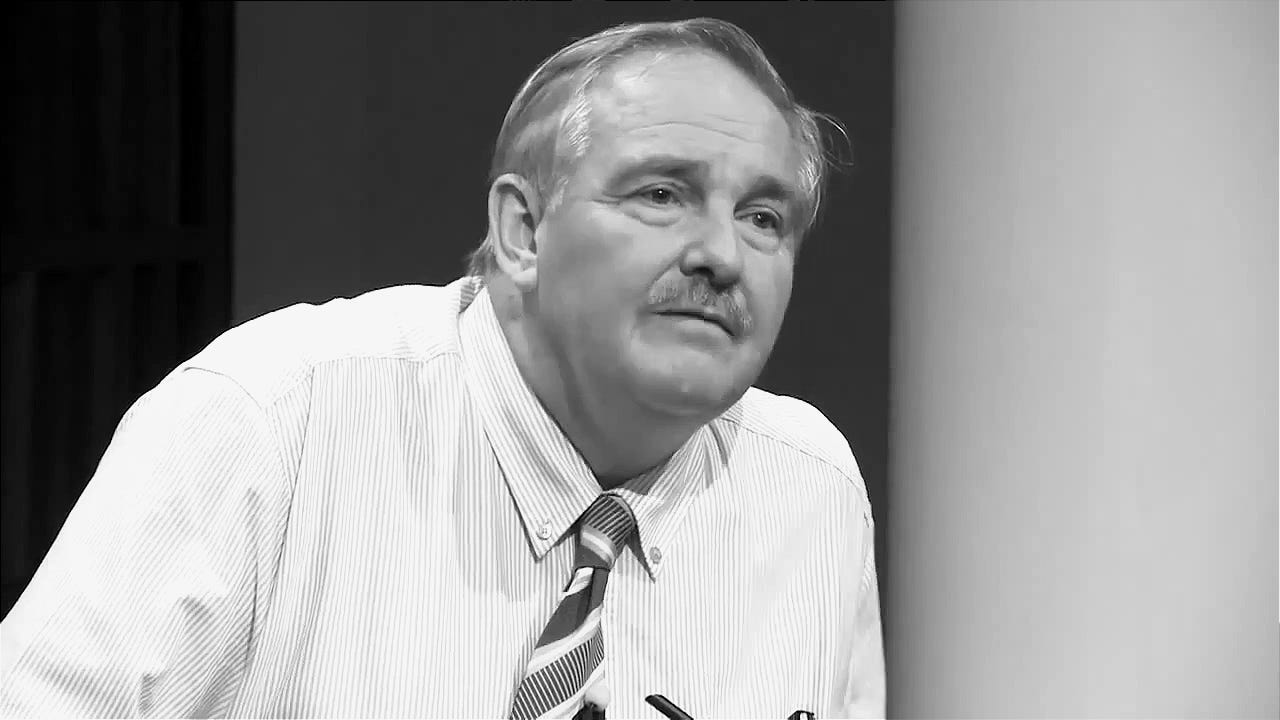
David Nutt answers like a man who already knows the fate of his words. He doesn’t soften, doesn’t build a path toward the point. He just delivers it all caps, no ceremony. Like telegrams from a trench where evidence no longer persuades, only endures.
The messages land like terse autopsy notes, each one reading as if written after many others were ignored:
“FAILURE – MORE DEATHS.”
“NICOTINE HARMS ARE GROSSLY EXAGGERATED.”
“USE MCDA IN ALL DECISIONS.”
It’s a remote interview that sounds like something between a technical memo and a fire alarm. No hedging, no “yes and no, depending on context.”
Nutt doesn’t write. He interrupts.
And in that gesture — impatient, nearly blunt — there’s a silent confession: in the public debate on drugs, long form has become a luxury reserved for those still naïve enough to think they’re being heard.
There are truths public policy avoids not because they’re uncertain, but because they’re too inconvenient to say out loud. While treaties condemn, Professor Nutt insists on comparing combustion and vapor, and on the error of conflating them.
In the intellectual biography of David Nutt, the pursuit was never just for data, but for structure. For a scale. For a ruler, you could lie flat on the table.
In 2014, David Nutt co-authored a paper that set out to do something both banal and subversive: compare the degree of harm across nicotine products, using a decision-engineering tool as dry as it is precise: Multi-Criteria Decision Analysis (MCDA).
Nutt, D. J., Phillips, L. D., Balfour, D., Curran, H. V., Dockrell, M., Foulds, J., Fagerstrom, K., Letlape, K., Milton, A., Polosa, R., Ramsey, J., & Sweanor, D. (2014). Estimating the harms of nicotine-containing products using the MCDA approach. European addiction research, 20(5), 218–225. https://doi.org/10.1159/000360220
The logic was simple, and for that very reason, explosive: if public policies are made in the name of “harm,” then why not measure harm?
MCDA was built for that: a way to compare variables in fields with no fixed metrics. The process follows a structured sequence: define the context, select the products, agree on criteria, score each item, assign weights, and then calculate an overall harm index. It’s a method that enables something rare in moral debates: showing where the differences lie, and by how much.
The method works like a small exorcism, not of politics, but of moralism disguised as science. Or perhaps, a bureaucratic exorcism.
You define what “harm” means, list the criteria, weigh the impacts, and show the math. The point isn’t to eliminate judgment, but to own it. To make it visible. Measurable. To lay it, finally, on the table.
David Nutt has paid a price for insisting that facts, once measured, should not bend to political protocol.
In 2009, while chairing the UK government’s Advisory Council on the Misuse of Drugs (ACMD), he publicly accused the drug classification system of distorting scientific evidence. He was asked to resign and, effectively, fired for stating the obvious: that data doesn’t answer to the chain of command.
The episode cast him as a kind of enlightened heretic: the scientist who believes his job is not to serve power, but to trouble ignorance.
He founded DrugScience soon after, not just as an institution, but as a message. A reminder that when evidence gets too close to power, it needs shelter. Or at least, a door that locks from the inside.
The Deliberate Refusal to Distinguish Between Fire and the Fire Alarm
Watching COP11 — the 11th Conference of the Parties to the WHO Framework Convention on Tobacco Control — David Nutt sees, beneath the new rhetoric, an old impulse: morality that prefers banning to understanding.
What he sees isn’t caution, but a kind of overconfidence: binary logic dressed up as precaution. The refusal to classify becomes a license to condemn everything at once.
Held in Geneva in November 2025, COP11 produced a series of technical resolutions — on environmental impacts, legal liability, funding, and other fronts detailed in the trilogy The Purity Regime: Liturgy, Shielding, and Doctrine. But it was a symbolic decision that echoed loudest: the declaration that all United Nations spaces must be free of “smoke and vapor.”
The minutes from the European Union delegation record, without ambiguity, how that symbolism turns into policy: a COP directive urging Parties to implement a full ban on the use and sale of tobacco products, including heated tobacco, and “novel and emerging nicotine products” such as e-cigarettes, pouches, and disposable vapes, across all UN-governed spaces.
To many delegates, the decision felt like institutional prudence, almost a hygienic reflex. In a landscape flooded with aggressive marketing, early uptake, and toxicological unknowns, the impulse seemed obvious: ban it all. Smoke and vapor are treated as a single vector of harm.
But to Nutt, that simplicity conceals something else: a deliberate refusal to distinguish between fire and the fire alarm.
Faith in the Measure
When I ask how he would apply his harm-assessment framework to nicotine products — cigarettes, vapes, heated tobacco, oral nicotine — David Nutt doesn’t elaborate. He just redirects.
“WE ALREADY DID — SEE THIS PAPER.”
The study, published in 2014 and mentioned earlier, carries a clarity that now feels almost anachronistic; like a remnant from a time when methodical comparison still held the power to discipline debate. Conducted by an international panel convened by DrugScience — including Nutt, Lawrence Phillips, David Balfour, H. Valerie Curran, Martin Dockrell, Jonathan Foulds, Karl Fagerström, Kgosi Letlape, Anders Milton, Riccardo Polosa, John Ramsey, and David Sweanor — the group evaluated twelve nicotine products across fourteen harm criteria: seven for users, seven for society. Weighted scores were applied to calculate an overall harm index for each.
The result was crystal clear. Cigarettes scored 100. Small cigars, 64. Pipes, 21. Everything else — e-cigarettes, oral tobacco, nicotine replacement therapies — landed at 15 or below. A difference not of degree, but of kind.
This type of ranking, if applied to anything else, such as cars, pharmaceuticals, or surgical techniques, would be treated as the start of regulation, not the end of it. It would lead to tiered policies: tighter controls on the most harmful, incentives to shift toward safer alternatives, and public messaging capable of holding two truths at once.
Less harmful isn’t harmless. But it’s still less harmful.
Nicotine, as Nutt insists, doesn’t live in the same moral universe as most regulated substances. It sits on a threshold, the place where public health meets sin, where policy slips from pragmatism into liturgy.
I ask Nutt what public health officials most misunderstand about nicotine risk. He doesn’t pause:
“THE HARMS OF NICOTINE ARE GROSSLY EXAGGERATED.”
And then, as if underlining it in red:
“THEY OVERESTIMATE THE HARMS OF PURE NICOTINE AND EQUATE IT TO SMOKED TOBACCO.”
For Nutt, the mistake isn’t just chemical: it’s narrative. Nicotine has become the cigarette’s proper name, the part you can say without having to say “cancer,” “class,” “boredom,” or “addiction.”
Smoke is chaos; nicotine is precise.
It’s the legible part of the habit, and therefore the most convenient to demonize.
The confusion isn’t just political. It’s structural. It’s embedded in media, in culture, in the social strata where smoking endures. The mistake is diffuse, reinforced, and culturally sedimented.
There’s data to prove it. A 2021 evidence update from the UK government found that only 11% of adult smokers knew that none, or only a small part, of smoking’s risk comes from nicotine.
With his technical stubbornness and the conviction that a systemic injustice is underway, Nutt reads that number the way a defense lawyer reads a case of mistaken identity: if the villain is misnamed, the verdict will be wrong, and substitution will fail.
If nicotine is seen as the killer, then the transition loses meaning. And smokers will keep doing what they’ve always done: burn.
Against Aerosol, Even Without Fire
The language of COP11 on cigarette alternatives — language that avoids distinguishing between smoke and vapor, and often treats nuance itself as a threat to enforcement — doesn’t strike David Nutt as a technical misstep. To him, it’s a regression.
“VERY REGRESSIVE, BECAUSE WE WILL NEVER ELIMINATE SMOKING,” he writes.
I ask whether COP11 signals a turning point: the abandonment of harm reduction in favor of an ideology of elimination.
Nutt responds like someone who’s seen this movie before, and counted the deaths at the end: “FAILURE – MORE DEATHS – THIS APPROACH HAS BEEN TRIED UNSUCCESSFULLY FOR 50 YEARS.”
It’s clear that Nutt sees “elimination” not as idealism, but as failure repeated. The all-caps reply is both message and medium; it performs the fatigue of saying the same thing for decades.
The argument is rooted in a blunt anthropology: nicotine use doesn’t vanish just because a treaty wants it to. The real question in this world isn’t whether purity can be manufactured but whether less death still can.
I ask Nutt how COP11’s stance might affect adult smokers looking for safer alternatives, especially in countries with limited cessation support.
He answers without pause, as if there’s no room left for diplomatic phrasing:
“IT WILL ENCOURAGE CONTINUED SMOKING AND DISCOURAGE SWITCHING TO SAFER ALTERNATIVES SUCH AS VAPING.”
That sentence captures the central fear of harm reduction: that a policy designed to reduce risk ends up shielding risk by blocking its alternatives.
COP11’s decision to declare all UN spaces “free of smoke and aerosol” may be its most telling gesture. It’s not just a policy of restriction, it’s a policy of equivalence.
Cigarettes and vaporizers. Combustion and vapor. Treated as if they posed the same threat. As if the fire alarm and the fire should be evacuated with the same protocol.
To Nutt, that equivalence doesn’t just obscure. It sabotages prevention.
Equivalence is the enemy of prevention.
Against Sin and the Sinner — Not Against Risk
David Nutt is under no illusions about what’s at stake. The question “Why aren’t we following the science?” strikes him as misframed, as does “Why do people still smoke?”
He’s spent decades dissecting the moral residue that seeps into drug policy. And in the regulation of nicotine, he sees a starker version of that ethical contamination.
“IN FACT, IT’S EVEN MORE MORALISTIC THAN OTHER DRUGS,” he writes.
Nicotine carries a deeply embedded stigma: it’s the habit you can smell, see, and touch. The staleness in the air. The yellowed fingertips. A visible addiction that has escaped the warning posters and settled into the smoker’s body.
To treat nicotine as a spectrum of risk sounds, to many, like indulgence. As if, by parsing nuance, we’re being seduced by the substance or its defenders.
The World Health Organization’s public stance reflects — and amplifies — this moral heat.
In its FAQ on e-cigarettes, the WHO states that nicotine is “highly addictive and harmful to health”; that there’s growing evidence these devices are dangerous and unsafe; and that epidemiological studies show young people who vape are up to three times more likely to start smoking cigarettes.
The 2023 “Call to Action” echoes that alarm, this time with the vocabulary of urgency. It demands “decisive” preventative action, focusing on protecting children, curbing use among non-smokers, and promising population-level harm reduction.
(Interlude)
Anyone willing to follow this rhetorical thread to its limit will find in Clive Bates an impatient and surgical guide. On two occasions, he dismantled the WHO’s e-cigarette claims line by line — not as academic disagreement, but as an open accusation of institutional bad faith.
In “World Health Organization fails at science and fails at propaganda – the sad case of WHO’s anti-vaping Q&A,” Bates parses the WHO’s “E‑cigarettes: how risky are they?” page, arguing that every answer is false, misleading, or simplistically evasive. He accuses the WHO of conflating absolute and relative risk, ignoring the difference between vapor and smoke, and overstating dangers to youth and bystanders.
Later, in “Fake news alert: WHO updates its post-truth fact sheet on e-cigarettes,” he returns to the same page — now revised — only to show how the edits are cosmetic. He claims the WHO continues to distort the literature on relative risk, gateway effects, adolescent brain damage, and other core issues. His conclusion is blunt: the FAQ isn’t a tool for public education, it’s a propaganda piece.
*
But what’s at stake in this battle isn’t just the accuracy of a paragraph or the curation of sources. The conflict is structural. The disagreement extends beyond science — it’s fundamentally philosophical. And deep.
Nutt wants a scale: to measure, to weigh, to rank. The WHO wants a wall: to block, to prevent, to stop anything before harm has a chance to enter. It’s the difference between mapping risks and outlawing them by decree. Between recognizing gradations and refusing to name them.
To Nutt, every risk should be compared. To the WHO, some risks should be silenced or leveled, so that none escape.
A report by the National Academies of Sciences, Engineering, and Medicine tries to reframe this dilemma in less inflammatory terms. Instead of slogans or blanket condemnations, it offers an equation: the net public health impact of e-cigarettes will depend on the balance of three forces in tension: youth initiation, adult cessation, and the intrinsic toxicity of the products.
The question, then, isn’t whether there is harm. The real dispute is over the net effect: whether the population curve bends toward fewer smokers or more nicotine users. And which of those curves should guide public policy.
Nutt’s answer to that balancing act is almost brutal in its simplicity. When asked how scientists can correct misconceptions about nicotine without encouraging underage use, he replies:
“TELL THE TRUTH.
AND SO WHAT IF MORE PEOPLE VAPE — IF IT’S NOT HARMFUL?”
There’s no nod to diplomacy. Just a stark question which, for him, says it all: do we prefer the comforting error or the inconvenient truth?
My admiration for Nutt didn’t arrive all at once. It grew the way hard convictions often do: slowly, through repetition. No nuance. No hedging. For him, truth isn’t something he settles for — it’s a requirement. Even if it brings unwelcome side effects.
That may be his most revealing line, not because it shocks, but because it names, plainly, a choice many prefer to leave unspoken: is it riskier to inform too much, or to protect too poorly?
It reads like a challenge. And maybe that’s what makes it so telling. Nutt seems more willing to be accused of recklessness than to be complicit in what he sees as a protective lie.
Where the Scale Prevails
If there’s one line that distills David Nutt’s ethos, it’s this: better to risk informing too much than to protect too little. However, in some locations, this logic is not just accepted but officially mandated.
When I ask for examples of ecosystems that prioritize evidence over moral condemnation, Nutt answers without hesitation:
“ONE LED BY INDEPENDENT SCIENTISTS, SUCH AS IN THE UK AND NEW ZEALAND, WHICH ENDORSE AND ENCOURAGE VAPING, ETC.”
New Zealand was blunt in its guidelines: vaping is not harmless, but it is less harmful than smoking. It can aid in quitting. And it’s not for non-smokers.
It’s a policy that deliberately tries to hold two truths at once: to acknowledge risk and still accept it as a tool.
Both the UK and New Zealand recognize a critical point often lost in the caricatures of the debate: reducing harm does not mean giving up on regulation.
British health updates emphasize, with almost pedagogical insistence, the need to correct distorted perceptions of risk. But they also treat youth vaping as a real concern, not just statistically, but ethically.
New Zealand, despite its explicit endorsement of vaping as a cessation tool, moved to restrict disposable devices — an effort to curb their appeal among young people. It’s a gesture that acknowledges a fundamental truth: the market doesn’t always follow policy. Sometimes, it skirts around it. Sometimes, it undermines it.
That’s the point so often lost in the moral simplification of harm reduction: in practice, it’s not a free pass or surrender. It’s a balancing act.
A country can say, based on evidence, that vaping is less harmful for adult smokers, and still restrict disposable vapes that show up in school bathrooms. It can say “switch” and “don’t start” in the same breath. And accept that this message will be contested. Reinterpreted. Fought over.
That kind of ambivalence, between the ideal and the possible, between risk and relief, is where public policy has to live. But not every country has the institutional stamina to hold that tension.
For low- and middle-income countries, places where resources are scarce but ash is plentiful, Nutt doesn’t offer suggestions. He gives commands.
How should FCTC/WHO recommendations be adapted to local realities?
“ALLOW VAPING AND SNUS.”
What would a realistic harm-reduction strategy look like in countries with limited health infrastructure and high use of combustible products?
“TAX SNUS AND VAPING MUCH LESS THAN CIGARETTES.”
For Nutt, taxation isn’t just about revenue: it’s pedagogy. Price teaches. What’s heavily taxed should disappear. What’s lightly taxed should replace it. He views fiscal policy as more than just an economic matter; he considers it a moral one. A silent lever of behavior.
Price is public health’s encrypted language: what gets expensive discourages. What gets cheaper guides.
What Grows When You Ban
Even where morality recedes and science advances, there’s a third force David Nutt never forgets: the market.
Because when policy fails to reckon with actual behavior and its own institutional limits, it’s the market that steps in to fill the vacuum.
I ask Nutt about the risks of low-income countries copying prohibitionist models from wealthier nations, without considering local epidemiology or enforcement capacity.
As always, his response offers no cushioning:
“IT WILL ENCOURAGE SMUGGLING AND MORE HARMFUL ILLEGAL CIGARETTES.”
It’s an old story in a new wrapper: banning without offering alternatives doesn’t eliminate the product. It eliminates control. A regulatory void doesn’t erase demand. It reroutes it. What fills that space is still a market, but one stripped of oversight, traceability, or brakes.
Even COP11 acknowledged — if only indirectly — the danger of losing control. By reaffirming the Protocol to Eliminate Illicit Trade in Tobacco Products, the treaty seemed to admit, between the lines, that prohibition isn’t enough.
Without regulated alternatives, consumption doesn’t vanish. It simply changes the course and label.
For Nutt, this makes the “elimination” strategy not only ineffective but dangerously naïve. If legal access to lower-risk nicotine is blocked, use won’t stop. It will just change suppliers. And the new supplier, he warns, won’t have a label, or quality standards, or any obligation to public health. Just a market.
Sweden, Japan, the UK: Follow Them
David Nutt’s favorite kind of evidence doesn’t always come from a clinical trial. Sometimes, it comes from a country.
“Countries like Sweden (snus), Japan (heated tobacco), and the UK (vaping) have seen declines in smoking linked to alternative nicotine products. What lessons should global bodies take from that?” I ask.
He answers with a single word:
“FOLLOW THEM.”
It’s a reply that distills his impatience with what he calls institutional blindness to observable reality.
But each of those examples, as Nutt well knows, is also a contested space.
Sweden, with its historically low smoking rates among men, is often cited as a model for snus integration. But the narrative is far from settled, and the correlation itself has become a battleground.
Japan’s case is even more tangled. Cigarette sales have plummeted over the past decade, yet the precise role of heated tobacco in that decline remains up for debate. Researchers disagree on how much is due to the new product and how much to broader trends — cultural shifts, policy accumulation, or changes long in motion.
None of these countries offers a clean natural experiment. But Nutt’s argument has never been about methodological purity: it’s about political humility.
In his view, global policy doesn’t need perfect control over every variable. It needs to watch what works, even if it works imperfectly.
The Least Visible Lobby
If Sweden, Japan, and the UK show that reality can challenge dogma, what keeps global policy from responding?
When I ask why harm reduction remains a zone of controversy within institutions like the FCTC, Nutt replies with the same bluntness that made him both famous and divisive:
“PRESSURE FROM WHO AND THE CHINESE GOVERNMENT, WHICH DOESN’T WANT COMPETITION FOR ITS STATE-RUN CIGARETTE INDUSTRY.”
Said like that, it sounds like an accusation. But what we can assert more safely is this: state ownership of tobacco creates structural conflicts of interest.
An official FCTC factsheet acknowledges that many countries maintain direct stakes in tobacco companies, explicitly naming the China National Tobacco Corporation as a state monopoly and the world’s largest cigarette producer.
There may be a whiff of Sinophobia in the framing, or maybe not. But the fact is on the table.
What’s missing, however, are the visible gears of this alleged pressure. Who applies it? In which meetings? In which draft versions of which texts?
Here, Nutt offers not evidence but instinct and intuition consistent with his worldview: if an incentive exists, it will eventually find a way to express itself.
If Nutt’s geopolitical claim is hard to verify, his methodological critique is crystal clear. And it always returns to the same point: the problem isn’t just in the products, it’s in the structure of decision-making itself.
To him, the failure is not just political. It’s one of design.
When I ask about the biggest communication failures in the nicotine space, he doesn’t hesitate:
“FAILURE BY WHO/COP11 TO USE MCDA APPROACHES — AS IN THE PAPER MENTIONED ABOVE.”
And when I ask what single structural reform would most improve global nicotine policy, his answer is again a directive:
“USE MCDA IN ALL DECISIONS.”
Nutt wants the COP to operate like an ethical spreadsheet: define criteria, assign weights, accept trade-offs, and make the whole process visible.
In that sense, Nutt is almost an anachronism, a scientist demanding that a moral institution behave like a system of calculation. A body that weighs, ranks, compares. That seeks evidence as if evidence still leads.
FCTC/COP, instead of distinguishing, collapsed distinctions. It advanced sweeping mandates and symbolic bans, folding combustible cigarettes and “novel nicotine products” into a single category of contamination not banned for their comparative risks, but for belonging to the same imagined threat.
The WHO, for its part, continues to spotlight potential harms, especially among what’s come to be defined as youth, and the persistent uncertainty around long-term effects.
This is the divide: one side calls for classification. The other, containment. Between these two impulses — to measure or to block — global nicotine policy wavers.
That’s the impasse: one side says, “sort it.” The other, “stop it.”
The Mistake Beneath All Others
If global policy is caught between measuring and blocking, the most fundamental distortion may not lie in strategy, but in its starting point. The villain is named wrong.
The final question was simple, almost technical: “What is the most widely misunderstood scientific fact about nicotine today?”
Nutt’s reply read like a diagnosis:
“THAT IS THE HARMFUL ELEMENT IN CIGARETTES.”
It’s not a trivial confusion. It’s the distortion that props up all the rest. If nicotine is seen as the absolute villain, everything associated with it — therapeutic replacement, vaping, transition — inherits the same stigma. And the smoker, facing uncertainty, stays put. Chooses the known harm. Because at least the devil you know has a name.
Nutt’s whole insistence — the capital letters, the fixation on scales, the refusal to partake in moral fiction — can be read as a single effort: to give public health back something it seems to have lost. The courage to distinguish.
He believes that accepting a spectrum of risk isn’t surrendering to industry. It’s surrendering to human behavior. People substitute. They always have. And in the end, only one ethical question remains simple and irreducible:
Will this substitution kill fewer people or more?
The FCTC-COP, meanwhile, excludes the person from the equation. It decides in a monologue. It sees the aggressive marketing, the vulnerable youth, the long history of corporate manipulation, and perhaps sees, in tolerance, the seed of relapse.
Its language — veteran and repetitive: “harmful,” “not safe,” “too early to tell” — doesn’t only sound cautious. To many, it reveals something else: a preventative refusal to think in gradients. A fear not so much of being wrong, but of leaving the door ajar. Of seeming complicit. Of looking captured. Of losing moral authority. Of disappearing as a guardian.
The tragedy, perhaps, is that both fears are real, though not equally so. And that’s why, among all of Nutt’s phrases, the most revealing wasn’t the loudest. It was the most bureaucratic:
“ALL OF THE ABOVE...”
That’s how he answered when I asked which research gaps should be addressed before COP12, scheduled for 2027 in Yerevan, Armenia.
“All of the above” is what you say when the questions no longer fit into separate columns.
When the evidence piles up, but institutional listening stays selective.
It’s also a quiet confession: A scale on the table only matters if someone in the room is willing to look at it.
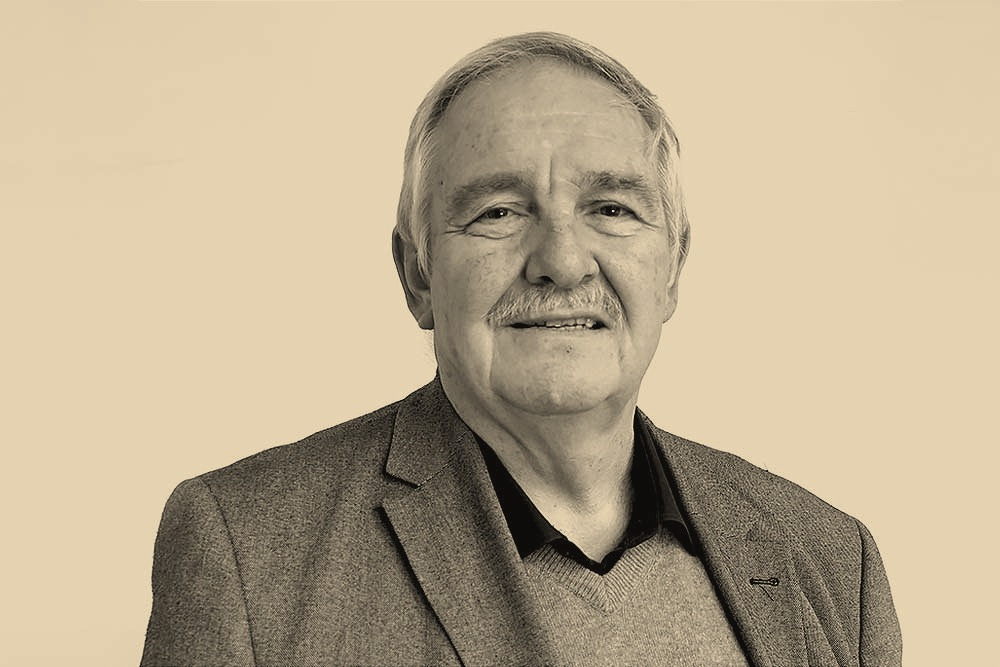
~ https://en.wikipedia.org/wiki/David_Nutt

An excellent summary of David Nutt and the power of measuring stuff, and how ideology and entrenchment have so far proved to be stronger than science.